Jeremy Russell, OR Productivity, surgical robot expert, pinpoints where the challenges and opportunities are in the surgical robot market.
It's been just over 36 years since the first laparoscopic removal of an appendix was performed in Germany, which caused such controversy that the then-president of the German Surgical Society suggested that the surgeon be suspended from medical practice.
Today, close to 10 million laparoscopic procedures are projected to be undertaken this year alone, and an estimated 750,000 of them will be conducted by the Da Vinci surgical robot.
So, as surgery becomes increasingly robotic, it’s worth pausing to review the benefits and trends of robotic surgeries.
Firstly, robotic surgery is not really ‘robotic’ but is a ‘master-slave’ relationship with a human surgeon. Most of what we call ‘robotic’ surgery essentially involves a mechanical medical device being controlledby a surgeon, which allows them to conduct a specific task more efficiently and accurately.
Secondly, if robots can improve visualisation and dexterity, and deliver better outcomes and shorter procedure times, then the logical path is to apply these robotic technologies to more procedures.
The only limitation is the cost of that move.
Surgical robotics: The current state of play
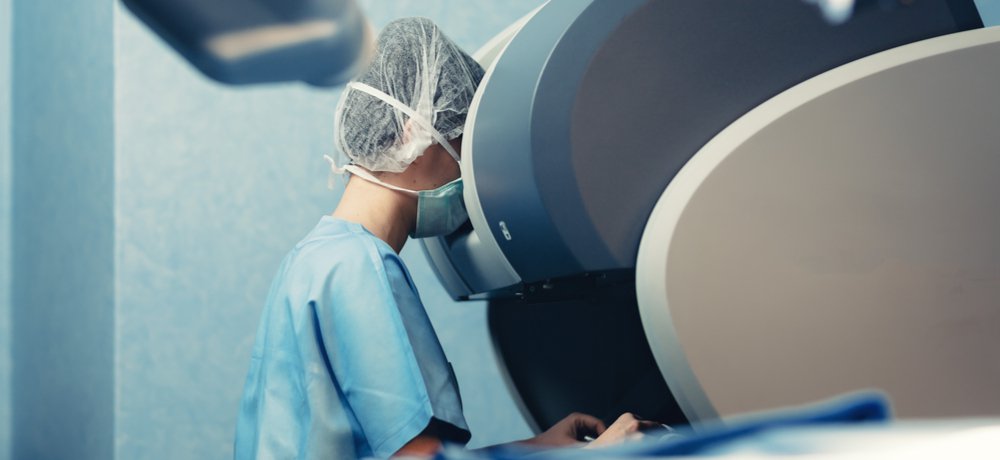
Surgical robots are typically very expensive. Most often they comprise of a unit placed over the patient with a separate control console for the surgeon.
The Da Vinci Surgical System is the most notable example. It uses a magnified 3D high-definition vision system with tiny flexible instruments far more manoeuvrable than the human hand.
However, if the drive to robotisation of laparoscopic surgery is to proceed, then the cost of delivering the benefits has to be very much reduced. Companies such as ORP provide the FreeHand robotic arm – a system to hold and control a laparoscope using surgeon head movements and a foot pedal.
At less than £150 per procedure, the cost of the system is a fraction of robots like the Da Vinci system, which typically costs £3,000+ per procedure.
With the advent of new suppliers of robotic tools from the likes of the United States Medical Innovations, Flexdex Surgical, and FreeHand already providing low-cost solutions, the growing surgical revolution is already upon us.
How this new revolution will transpire is unclear, but the new robotic options will challenge the institutional mindset that robotic surgery is specialised and expensive.
Lower costs will enable direct economic benefits to be much more easily established and allow healthcare systems around the world to determine how best to apply these new technologies.
Moreover, with the global shortage of healthcare staff forecast to grow over the next few years, the ability of surgeons to operate more independently with a robotic, rather than a human assistant, will deliver both cost savings and productivity benefits.
Cost
It is likely that the move to more widespread adoption will be more rigorously debated and analysed than the initial moves into robotic surgery.
However, with staffing of healthcare systems becoming an increasingly important global issue, the ability to deliver more controlled and accurate surgery using fewer members of staff will undoubtedly be attractive.
And, if robotic systems are shown to increase efficiency and safety whilst bringing down costs, it will become increasingly difficult for institutions to drag their feet in adopting them.
Convincing healthcare systems to invest in these systems in order to deliver substantial savings elsewhere will be a challenge, but no more so than other innovations that are developed.
The greatest challenge to the implementation of such devices, is the cost. However, one can argue that investing in these technologies isn’t just a sensible financial decision, it’s also an urgent moral decision that could help save the NHS as we know it.
The economics
Regardless of institutional hesitations, market projections appear to predict that robot surgery is winning the economic argument. The Surgical Robotics Market was evaluated at $3bn in 2014, and is expected to double to $6bn by 2020, according to Allied Market Research.
And due to a growing demand for minimally invasive procedures, the global market for laparoscopic devices alone is projected to reach $12.3bn by 2024.
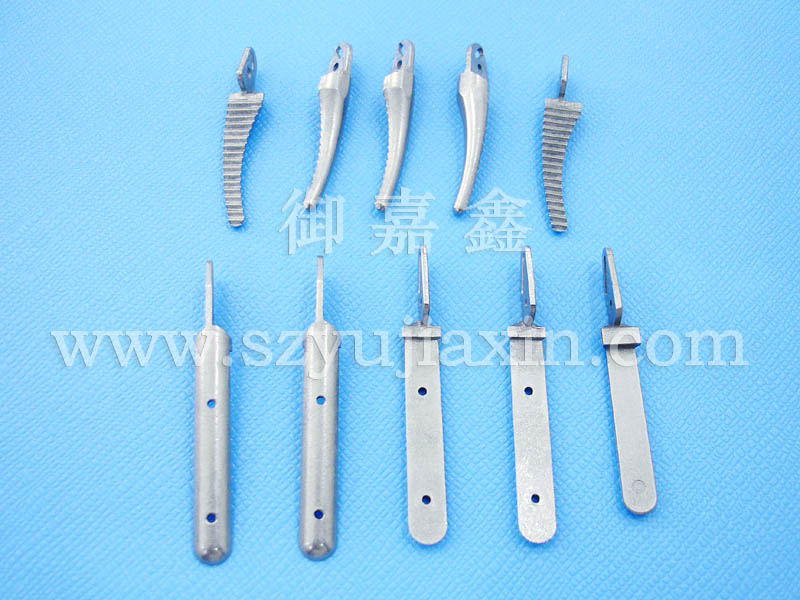
Shenzhen Yujiaxin Tech. Co., Ltd. specializes in the production of various laparoscopic surgical instrument forceps, surgical robot grasping forceps, electrocoagulation forceps, surgical blade heads, surgical grasping forceps, ultrasonic surgical blade heads, as well as medical equipment parts and mechanical medical equipment parts. The company also provides OEM customized processing services according to customer drawings to meet their individual needs.
 info@szyujiaxin.com
  中文
中文 English
 日本語
日本語 Deutsch
 Русский
 SHENZHEN YUJIAXIN TECH CO.,LTD.