 info@szyujiaxin.com
  中文
中文 English
 日本語(yǔ)
 Deutsch
 Русский
 SHENZHEN YUJIAXIN TECH CO.,LTD.
Powder metallurgy strength,metallic materials,composite materials,powder metallurgy products,processing conditions,powder properties,sintering process,powder metallurgy technology,powder metallurgy company,powder metallurgy manufacturer,powder metallurgy process

- Email: info@szyujiaxin.com
- Whatsapp: +8615986816992
- Wechat: yujiaxin-666
- QQ: 2269845694
Powder Metallurgy Strength Analysis Understanding the Sources and Influencing Factors of Strength
Date:[2024/5/22]
Powder metallurgy is a technology that manufactures metal materials, composites, and various products through the preparation of metal powders or mixtures of metal and non-metal powders, followed by forming and sintering processes. Its products excel in strength, wear resistance, corrosion resistance, and other aspects, making them widely used in automobiles, aerospace, machinery, electronics, and other fields. However, the strength of powder metallurgy products is not determined by a single factor but is influenced by numerous factors. This article aims to delve deeply into the sources and influencing factors of powder metallurgy strength.
Firstly, the sources of strength in powder metallurgy products primarily stem from the bonding strength between powder particles and the microstructure of the products.
The bonding strength between powder particles serves as the foundation for the strength of powder metallurgy products. During the compaction process, powder particles approach each other under mechanical force and form a solidified system through atomic diffusion and bonding during sintering. Factors such as the shape, size, distribution, and surface state of powder particles affect the contact area and bonding strength between particles, thereby influencing the overall strength of the product.
Moreover, the microstructure of the product significantly impacts its strength. During the sintering process, pores and grain boundaries form between powder particles. The size, quantity, distribution of pores, and the characteristics of grain boundaries all affect the strength and performance of the product. For instance, excessive pores or oversized pores can reduce the density and strength of the product, while the characteristics of grain boundaries influence the fracture toughness and corrosion resistance.
Secondly, the strength of powder metallurgy products is influenced by various factors, primarily including powder properties, processing conditions, sintering processes, and raw material selection.
The properties of the powder play a crucial role in determining the strength of powder metallurgy products. Firstly, the particle size distribution of the powder significantly affects the strength of the product. A uniform particle size distribution facilitates the formation of a dense green body during compaction, thereby enhancing the strength and density of the product. Secondly, the chemical composition and purity of the powder also impact the strength. The presence of impurities can weaken the bonding strength between powder particles, leading to decreased product strength. Additionally, the morphology and surface state of the powder influence particle-to-particle contact and bonding.
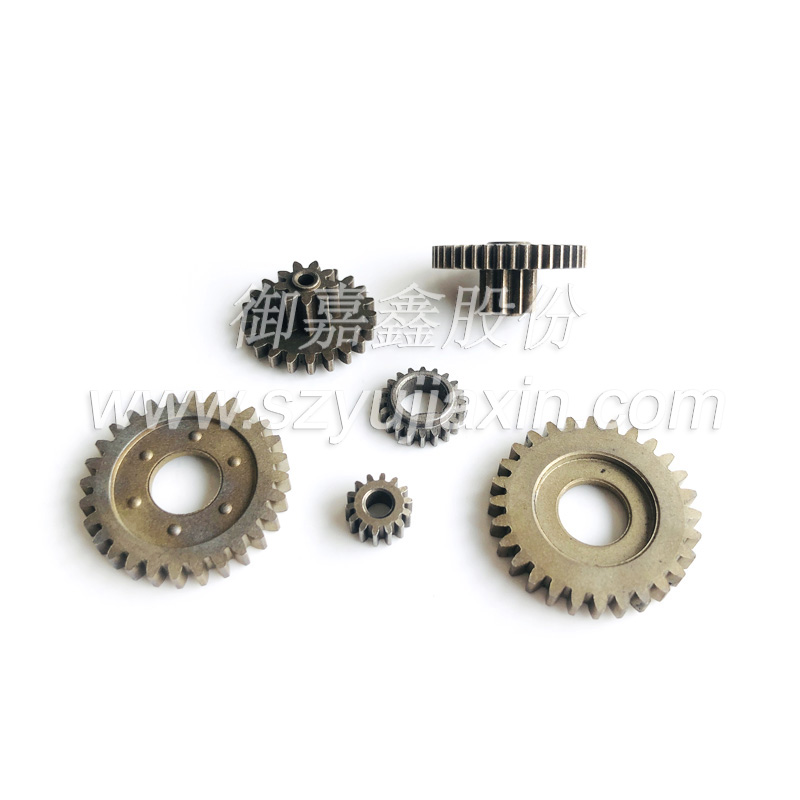
Processing conditions are another key factor that affects the strength of powder metallurgy products. Parameters such as the pressure, speed, and temperature employed during compaction influence the arrangement and bonding of powder particles. Appropriate compaction pressure and speed can enable tight packing of powder particles, resulting in increased green body density and strength. Simultaneously, the control of compaction temperature is crucial, as excessively high or low temperatures can negatively affect particle bonding and diffusion.
The sintering process is a critical step in the formation of the strength of powder metallurgy products. Sintering temperature, time, and atmosphere play pivotal roles in determining the final strength of the product. Optimal sintering conditions promote the densification of the material, enhance particle bonding, and minimize porosity, thereby maximizing the strength of the powder metallurgy product.
In conclusion, understanding the sources and influencing factors of strength in powder metallurgy is crucial for optimizing the manufacturing process and enhancing the performance of the final products. By carefully controlling the powder properties, processing conditions, sintering processes, and raw material selection, manufacturers can achieve powder metallurgy products with superior strength and durability, meeting the demands of various industrial applications.